

Leica M6 Review: Why This Legendary Camera is the Only One I’ll Ever Need

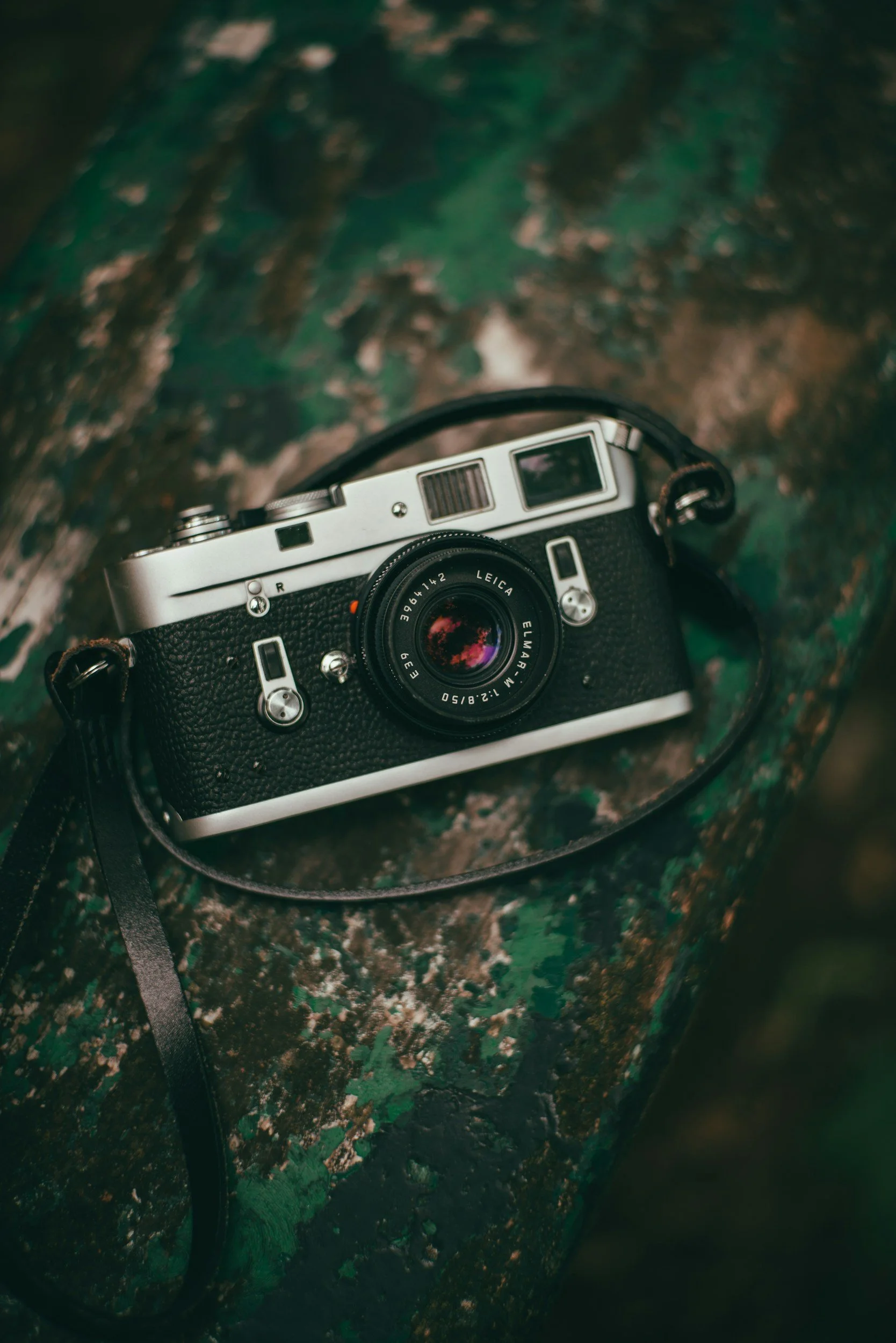
When I think about my journey into film photography, there’s one camera that stands out from the rest: the Leica M6. As a photographer deeply interested in capturing the fleeting beauty of everyday moments, there’s something about the Leica M6 that just clicks (pun intended). It has become an extension of how I see the world. Whether I’m on a quiet suburban street or navigating the bustling city, I never leave home without it. Today, I want to dive into why the M6 is my favorite camera and why it deserves every bit of the legendary status it holds.
1. Built to Last: The Timeless Design and Durability
When it comes to craftsmanship, few cameras have the same legacy of durability and timeless design as the Leica M6. Leica is known for its meticulous attention to detail, and the M6 is no exception. Built with high quality materials and engineered to withstand heavy use, the M6 looks and feels like a classic. The sturdy, compact brass and aluminum alloy body is built to endure decades of shooting. It’s an heirloom piece designed to last through generations.
The weight of the M6 is a testament to its build quality. For someone like me, who’s always on the move and needs equipment that can handle the hustle, that durability is priceless. I’ve taken it on hikes, on crowded city streets, and even to chaotic events, and it’s held up through it all without a single hiccup. This camera isn’t just resistant to wear and tear, it actually thrives in challenging environments, and the elements have only given it a patina that adds to its character.
Another timeless aspect of the Leica M6 is its simplicity and minimalism. This camera is not weighed down by unnecessary features or flashy gimmicks. Instead, the M6 has a straightforward design that prioritizes the essentials: manual control, clear optics, and an efficient layout. Leica kept the design refreshingly clean, opting for a layout that’s intuitive and easy to navigate, with only the essentials, shutter speed dial, film advance lever, and rewind knob. By focusing on these basics, Leica created a camera that doesn’t just stand the test of time physically but also in terms of usability. Decades later, it remains intuitive and relevant, especially for those who value a no frills approach to photography.

Beyond its physical durability, the M6 has a kind of “emotional durability” that keeps photographers coming back to it. It’s a camera that doesn’t lose its magic over time. In fact, the more you shoot with it, the more you understand the thought and intention behind its design. There’s an enduring charm in using a camera that’s designed to let you focus on the art itself, free from distractions. Leica understood that photographers needed something reliable, timeless, and crafted with care, and that’s exactly what the M6 delivers.
In a world where technology changes rapidly and gadgets quickly become outdated, the M6 stands as a symbol of permanence. It’s a camera that feels less like an object and more like a partner in the creative process. When you shoot with the M6, you’re not just capturing images; you’re carrying forward a tradition of craftsmanship and quality that’s nearly impossible to find in today’s market. It’s the kind of camera that makes you realize the value of investing in something built with intention. A piece of gear that won’t just capture your memories but will become a part of them, a constant in a world that’s always changing.
2. Precision in Every Frame: The Rangefinder Experience

Image: Emulsive.org
Shooting with a rangefinder like the Leica M6 is a unique experience, especially in an age dominated by digital viewfinders and autofocus systems. There’s something incredibly satisfying about aligning those twin images until they become one, something that requires patience, focus, and a bit of practice. The manual focus on the M6 is buttery smooth, and once you get used to the process, it becomes second nature, an almost meditative part of the photographic experience.
But what makes the rangefinder system so powerful on the Leica M6 isn’t just the feel, it’s the way it enhances your connection with the subject. There’s no screen to hide behind, just you, the frame, and the moment. In a way, it forces you to slow down (cliché, I know!), to really look, and to make sure every shot counts. If you’re looking to improve your composition and attention to detail, the M6 is like a masterclass in slowing down and seeing with intention.
3. Simplicity Meets Flexibility: The M6’s Metering System
One of the most beloved features of the M6, and a real upgrade from the earlier M-series cameras, is its built-in light meter. Unlike fully automatic cameras, the Leica M6 doesn’t do all the thinking for you, but the meter gives you just enough guidance to make confident exposure choices without feeling like the camera is taking control. The simplicity here is what makes it brilliant: a small dot in the viewfinder that nudges you left or right to get your exposure just right.
This semi-manual approach means you’re still very much in charge, but you don’t have to carry around an external light meter unless you’re shooting in tricky lighting. It’s exactly the right balance between control and convenience, letting you focus on capturing the shot rather than fiddling with settings.
4. Lens Compatibility: The Leica M6 and Finding Your Perfect Match

Leica lenses are renowned for their sharpness, clarity, and beautiful bokeh, and the M6 is compatible with Leica’s M-mount lenses and a whole range of M-mount lenses from other brands, opening up a world of creative possibilities. Personally, I shoot with a 35mm Summilux 1.4 ASPH, a lens celebrated for its superb image quality, fast aperture, and versatile focal length. This lens lives on my M6 because it perfectly complements my style, allowing me to capture both wide street scenes and intimate, detail oriented shots with ease. But for those exploring other focal lengths, the M6 has options for everyone, from wider 28mm lenses ideal for street photography to the classic 50mm for timeless portraiture.
The M6 comes in a few viewfinder magnifications. Specifically, .58x, .72x, and .85x and choosing the right one can make a big difference based on the lenses you plan to use.
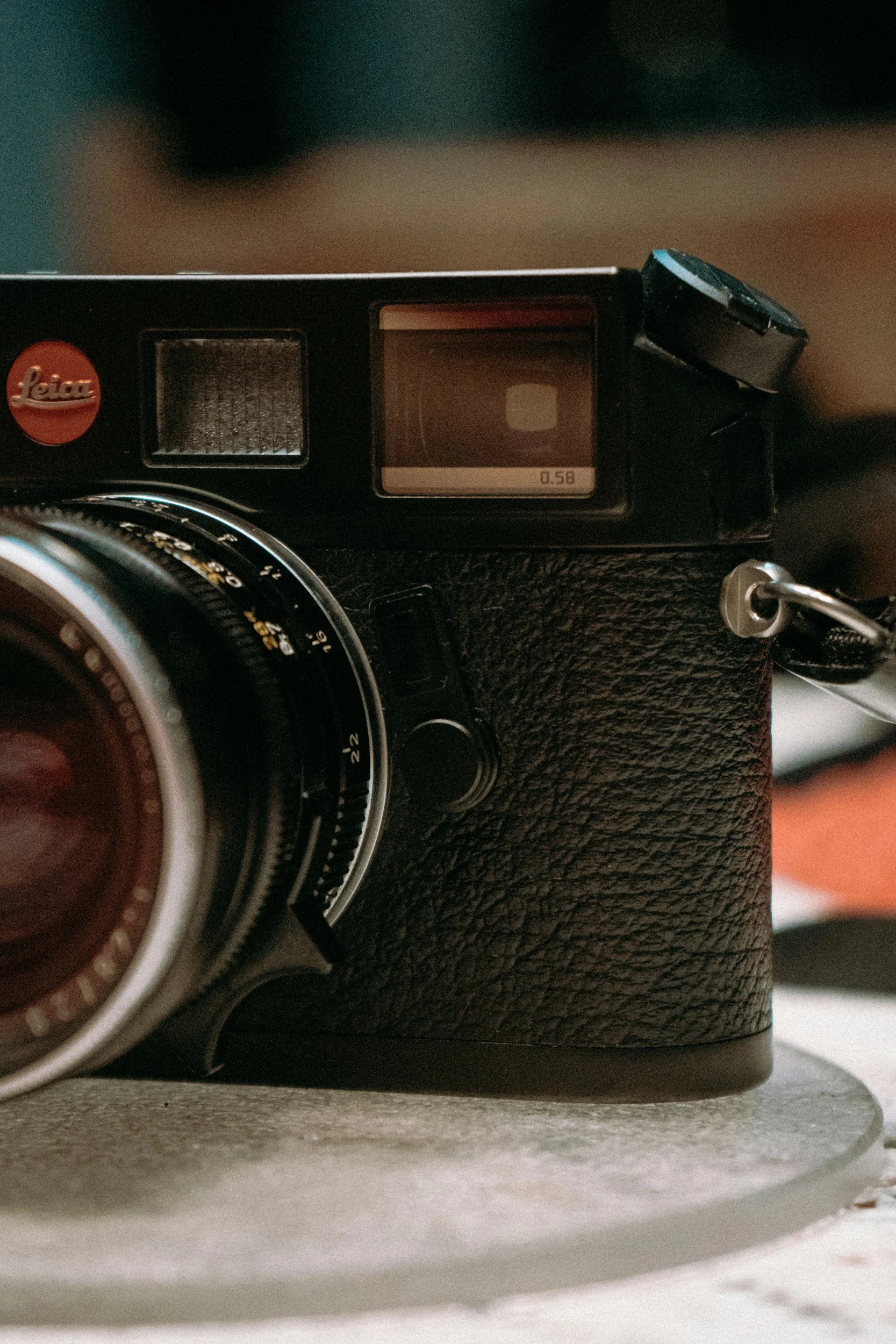
.72x Viewfinder: This is the most popular version and a versatile choice for most photographers, especially those who, like me, favor the 35mm focal length. The .72x magnification strikes a great balance, providing enough room to compose easily with lenses from 28mm up to 90mm, with clear framelines for each. If you’re primarily shooting with 35mm or even occasionally 50mm lenses, the .72x is likely the best fit.
.58x Viewfinder: For photographers who lean toward wider lenses, like a 28mm or even 21mm, the .58x viewfinder can be a great choice. The lower magnification allows for a wider field of view within the finder, making it easier to compose accurately with wide-angle lenses without the need for an external viewfinder.
.85x Viewfinder: If portraits are more your style, or if you’re drawn to the 50mm or 90mm focal lengths, the .85x version offers a higher magnification that makes focusing easier at longer focal lengths. This setup is popular among portrait photographers and those who prefer a more “zoomed-in” viewfinder for precision with longer lenses.
Whatever your style, the M6’s compatibility with Leica glass makes it a powerhouse for any type of film work. Its flexible viewfinder options and compatibility with some of the finest lenses ever made ensure that no matter your focal length preference, the Leica M6 can be tailored to meet your creative vision.
5. Lenses: You Don't Need Leica Glass to Shoot a Leica
My primary lens is the Leica Summilux 35mm f/1.4 ASPH, and it lives on my M6 about 95% of the time. It's the lens I reach for at weddings, on the street, for documentary work, for everything. The rendering, the speed, the way it handles flare and contrast. There's a reason it has the reputation it does. If you can afford it, it's worth it.
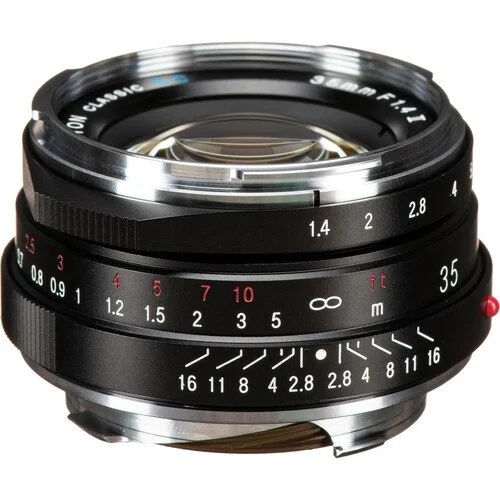
But I want to be honest about something. You don't need a Leica lens to get incredible results from an M6. Before I owned the Summilux, I shot the Voigtlander Nokton 35mm f/1.4 II for a long time, and it's a genuinely excellent lens. Sharp, well built, smooth focus, and it renders beautifully on film. At a fraction of the Summilux price, it's one of the best values in the M-mount ecosystem. If you're building your first M6 kit and the cost of Leica glass is a barrier, the Voigtlander 35mm is where I'd point you without hesitation. I shot a lot of work I'm proud of on that lens.
When I want to switch things up from 35mm, I reach for the Voigtlander Nokton 50mm f/1.2. This thing is a portrait monster. At f/1.2 on film, the depth of field is paper thin in the best possible way. It forces you to be precise with your focus, which the M6's rangefinder handles well. The rendering wide open has this dreamy, almost three dimensional quality that I haven't found in many other lenses at any price point. Stopped down to f/2 or f/2.8 it sharpens up beautifully for more controlled work.
The M-mount system is one of the deepest lens ecosystems in photography. Between Leica, Voigtlander, Zeiss, and others, there's a lens for every budget and every style. You can start with a $300 Voigtlander and shoot images that hold up against anything. You can invest in Leica glass when you're ready. The M6 doesn't care what's mounted on the front. It just works.
6. Image Quality: That Leica Look
Anyone who’s shot with Leica lenses knows that the images have a certain look. A character that’s hard to describe yet instantly recognizable. The Leica M6, when paired with a quality Leica lens, captures scenes with a warmth, depth, and richness that feels almost three dimensional. It’s a look that draws you in, an aesthetic quality that keeps me coming back to the M6 time and again, knowing that each frame will carry the signature Leica feel that digital often struggles to replicate.
A big part of what makes this look so unique is micro-contrast, the subtle contrast between fine details that Leica lenses are famous for. Unlike bold, high contrast, which can sometimes flatten an image, micro-contrast enhances depth and dimension in a much subtler way. It helps define textures, highlight tonal transitions, and create a sense of realism that feels more like looking through a window than at a photograph. This characteristic gives the images a certain “pop” that’s hard to find with other cameras, adding layers of nuance and mood to every shot.


Then there’s the warmth Leica images are known for, particularly when shooting on film. The M6 captures color with a natural, organic feel, where hues are rendered warmly without oversaturation, creating a timeless look. This warmth is particularly evident in skin tones and natural light, where the tones come through beautifully soft and balanced. Whether it’s the subtle golden hues of a sunset or the earthy tones of a quiet street scene, the M6 and Summilux combination translates these colors into an almost cinematic palette, giving each frame an emotional resonance.

Leica lenses, like the 35mm Summilux 1.4 ASPH, are also known for their tonal range and the smoothness with which they transition between shadows, mid-tones, and highlights. The M6 captures these tonal subtleties perfectly, producing images that feel both sharp and soft at once. Highlights roll off gently, and shadows hold detail without overwhelming the image, creating a balanced, natural look that feels right at home on film. Combined, these qualities give the images a depth that feels palpable, where the tonal gradations add to the sense of depth and dimensionality.





Lastly, there’s a creaminess to the bokeh that Leica lenses are celebrated for. When shooting at wide apertures, backgrounds blur into a smooth, painterly wash that isolates the subject in a way that feels almost tactile. It’s not about sharpness at all. Instead, it’s the subtle character that comes through in those out of focus areas. This bokeh quality softens the background without distracting from the subject, enhancing the sense of intimacy and focus in portraits, street shots, or even quiet landscapes.

In a world where digital cameras often prioritize sharpness and clarity at the expense of character, the Leica M6 is a reminder of the art of image making. Its analog nature, paired with Leica’s renowned lenses, produces a look that feels timeless, balancing sharpness with softness, contrast with subtlety, and warmth with realism. Every frame shot on the M6 has that Leica aesthetic. A soulful, immersive quality that digital may strive to emulate but can rarely match.

7. Which Leica M6 Should You Actually Buy? Classic vs TTL vs 2022 Reissue
This is the question I get asked more than any other, so let's break it down. There are three distinct versions of the Leica M6, and they're different enough that it matters which one you end up with.
The M6 Classic (1984–1998) is the one most people picture when they think "Leica M6." It's the original. Fully mechanical, built-in TTL light meter, and a compact body that feels like it was carved from a single piece of metal. The shutter speed dial is small. That's worth knowing upfront because you will be adjusting it constantly, and with the camera to your eye it takes some getting used to. The meter uses two simple arrow LEDs in the viewfinder: match them up and your exposure is dialed. No frills, no fuss. This is the version I'd recommend to most people.
A clean, standard black or silver body with a 0.72x viewfinder typically sells for $2,600 to $2,900 on the used market. The overall average has been trending just under $3,000. If you find a nice one for under $2,600, that's a solid deal.
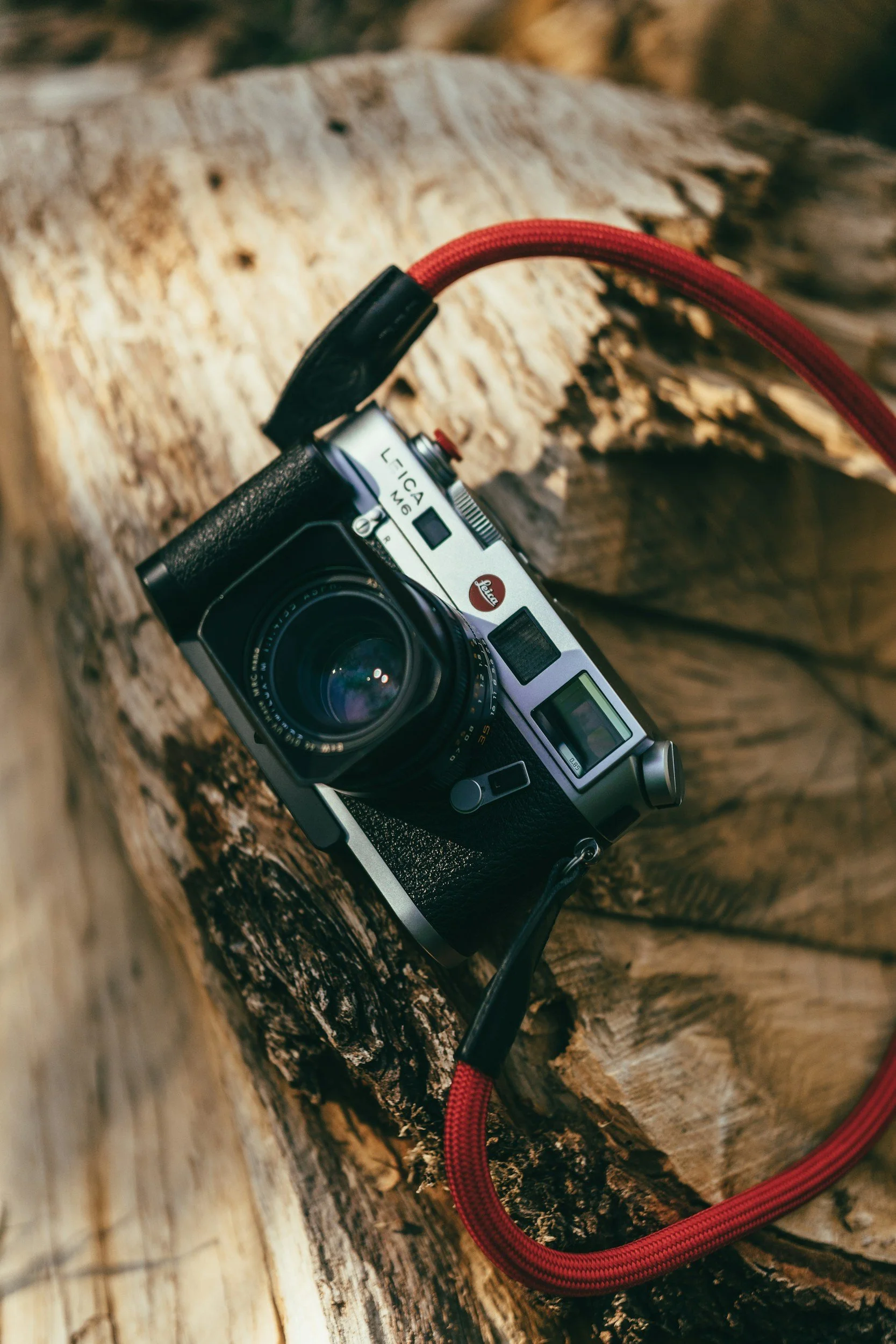
The M6 TTL (1998–2002) added TTL flash metering and, more importantly, a larger shutter speed dial that's significantly easier to adjust while shooting. It also has three meter LEDs instead of two, adding a center dot for "correct exposure" which some people prefer. The TTL version is slightly taller due to the redesigned top plate. If you shoot flash regularly, the TTL metering is a genuine advantage. If you don't, the main reason to seek one out is that bigger shutter dial. Everything else between the Classic and the TTL is functionally identical. This is the version I personally shoot and love to death.
The TTL has historically traded at a $300 to $400 premium over the Classic, though that gap has been compressing recently. Expect to pay roughly $2,700 to $3,200 for a standard black or silver body.
The 2022 Reissue is Leica's current production M6. It retails for $7,000 new. Mechanically, it has more in common with the Leica MP than the original M6. The top plate is milled from solid brass instead of the Classic's zinc, the viewfinder optics are coated (less flare), and the meter adds a center dot LED like the TTL. It does not have TTL flash metering though. It uses the Classic's smaller shutter speed dial. It's a beautiful camera and it comes with a warranty and the peace of mind of buying new, but you're paying a significant premium for that.
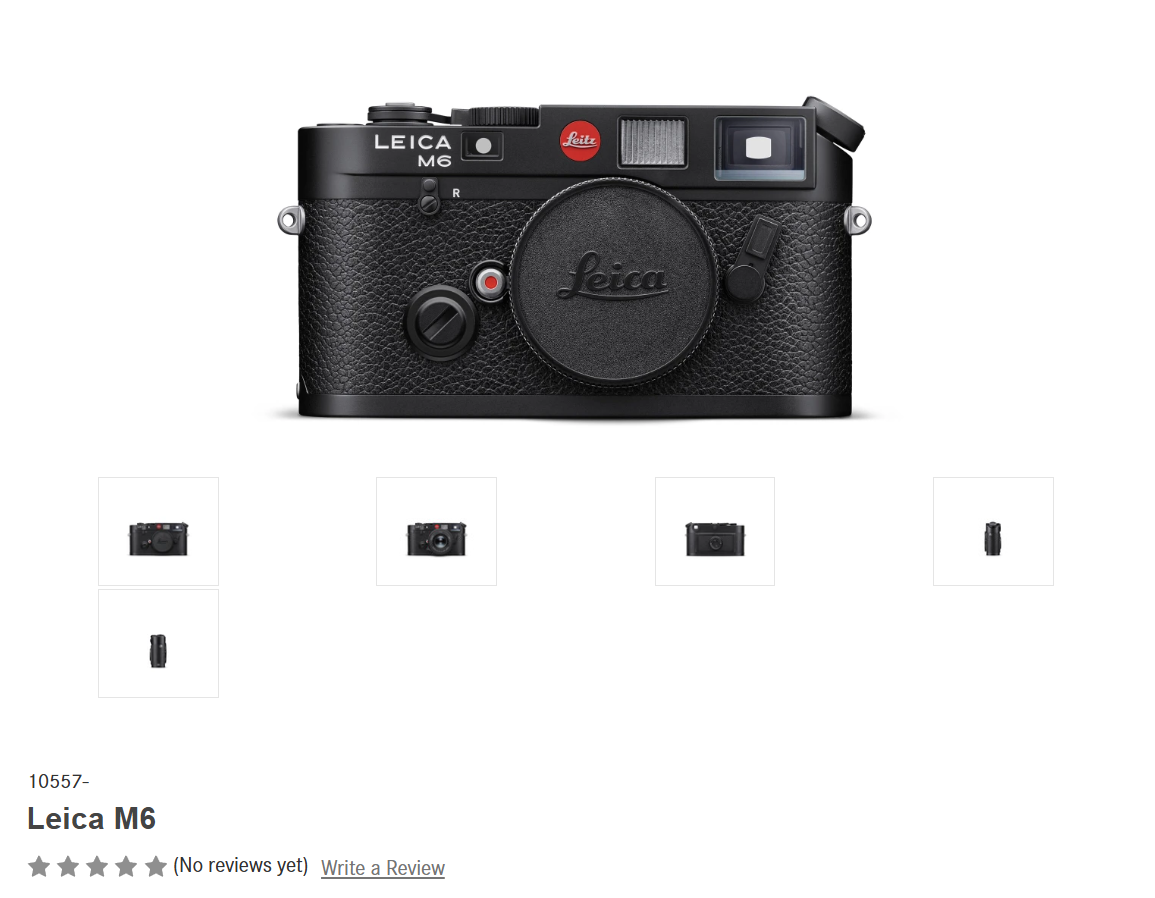
My honest take: unless you need TTL flash or want the security of buying new, the Classic is the one to get. It's the least expensive option, it's the camera that built the M6's reputation, and at this point the design has proven itself across four decades. The TTL is worth the premium if you can find one at a reasonable price and care about the bigger dial. The 2022 Reissue is a great camera that I'd have a hard time recommending over a well-maintained Classic at nearly double the price.
8. Should You Buy a Leica M6?
Let me be direct. The Leica M6 is not for everyone, and at $2,600+ for a used body (before you buy a lens), it shouldn't be an impulse purchase. Here's how I'd think about it.
Buy the M6 if:
You're already shooting film and you want a rangefinder that will last the rest of your life.
You want a camera that's fully mechanical, needs no batteries to fire the shutter, and can be serviced essentially forever.
You value the process of manual focus, manual exposure, and the discipline of 36 frames per roll.
You want a system with access to some of the finest lenses ever made across multiple price points.
You're a working photographer who wants to add film to your client work in a reliable way.
Don't buy the M6 if:
You're brand new to film photography. Start with something less expensive. A Canon AE-1, a Nikon FM2, a Pentax K1000, or even a point and shoot. Learn the fundamentals of exposure, learn to scan and process film, figure out if you actually enjoy the workflow before committing to a Leica. The M6 will still be there when you're ready.
You want autofocus. The M6 is manual everything. If the idea of manually focusing in fast-moving situations stresses you out, this isn't the right camera.
You're buying it because you saw it on social media and it looks cool. The M6 has become something of a status symbol in photography circles, and there's nothing wrong with appreciating a beautiful object, but if that's the primary motivation, you'll probably get more satisfaction from a camera that costs a quarter of the price and takes equally great photos. The magic of the M6 is in the shooting experience, not the badge.
One thing I want to be honest about: the Leica M6 is still just a light-tight box. At the end of the day, it does the same thing every other film camera does. It holds film flat, opens a shutter, and lets light hit emulsion. You can take the same photos with a $200 Canon AE-1 or a beat-up Nikon FM. The film and the lens are doing most of the work when it comes to the final image. What the M6 gives you isn't better photos. It's a better experience making them. The way it feels in your hand, the build quality, the butter-smooth film advance, the quiet confidence of the shutter. It's the difference between a tool you use and a tool you love using. That matters more than people give it credit for, because a camera you enjoy shooting is a camera you actually take with you. But don't let anyone tell you that you need a Leica to make great images on film. You absolutely don't.
Alternatives to consider:
If you want a Leica M experience at a lower price, the Leica M3, M2, or M4 are all built to the same (arguably higher) standard as the M6. You lose the built in meter but gain incredible build quality and usually save $800 to $1,200. If you're comfortable with a handheld meter or shooting Sunny 16, these are fantastic cameras.
If you want a metered rangefinder without the Leica price, the Voigtlander Bessa R3A or R2A are solid, capable cameras that accept M-mount lenses. They're not built to the same standard as a Leica, but they're a fraction of the cost and they work well.
If you want medium format and you like the deliberate, slow approach to photography that the M6 encourages, consider something like the Fuji GW690III. I adore this camera as well, but that’s a story for another blog post. It's a completely different animal, but if what draws you to the M6 is the intentionality and the film aesthetic, medium format takes that even further.
9. Why I Never Leave Home Without It

After years of using the Leica M6, it has become my trusted companion in the truest sense of the word. It feels like an extension of my creative vision, a constant in my life that I can rely on to bring out the best in my work. In a world that often feels fast paced, chaotic, and, at times, overwhelming, the Leica M6 offers a moment of stillness and it reminds me to slow down, to breathe, and to take in the details that make up life’s fleeting moments.
There’s something profoundly grounding about shooting with a camera that demands presence and intention. Every click of the shutter feels purposeful and in those moments, when looking through the viewfinder, it’s as if time pauses and there’s just me and my subject. It’s a space where I can fully immerse myself, savoring the process rather than rushing toward the result. The tactile nature of film, the anticipation of waiting to see how a shot turns out, is a reminder of the beauty in patience and the reward in the journey itself.
Over the years, the M6 has been my partner in preserving memories, as well as a trusted ally in capturing the subtle and the quiet beauty of everyday life. Each shot, each frame, feels like a piece of my story, recorded in a way that feels more real and lasting than anything digital can offer.
That’s why I never leave home without it. The M6 has a way of turning even the simplest scene, a quiet street, a fleeting glance, or soft afternoon light, into something meaningful and unforgettable. It’s a reminder that even in a fast-paced world, there’s magic in slowing down, and savoring life as it happens.

Final Thoughts
The Leica M6 is, without a doubt, my favorite camera, and I’ll likely be shooting with it for years to come. For anyone considering stepping into the world of Leica, the M6 is a beautiful entry point. It’s challenging yet rewarding, nostalgic yet timeless, and above all, it’s a camera that respects the art of photography.
If you’re drawn to capturing moments with intention, if you want to create images that resonate with nostalgia and depth, the Leica M6 is a camera that will make every frame feel meaningful. For me, that’s everything I could ever ask for in a camera.
Some links on my blog are affiliate links. This means if you decide to make a purchase through these links, I may receive a small commission at no additional cost to you. It's a wonderful way to support the content I create, and I only recommend products I genuinely love and believe in. Your support means the world to me, and I'm grateful for every click, purchase, and kind word.
